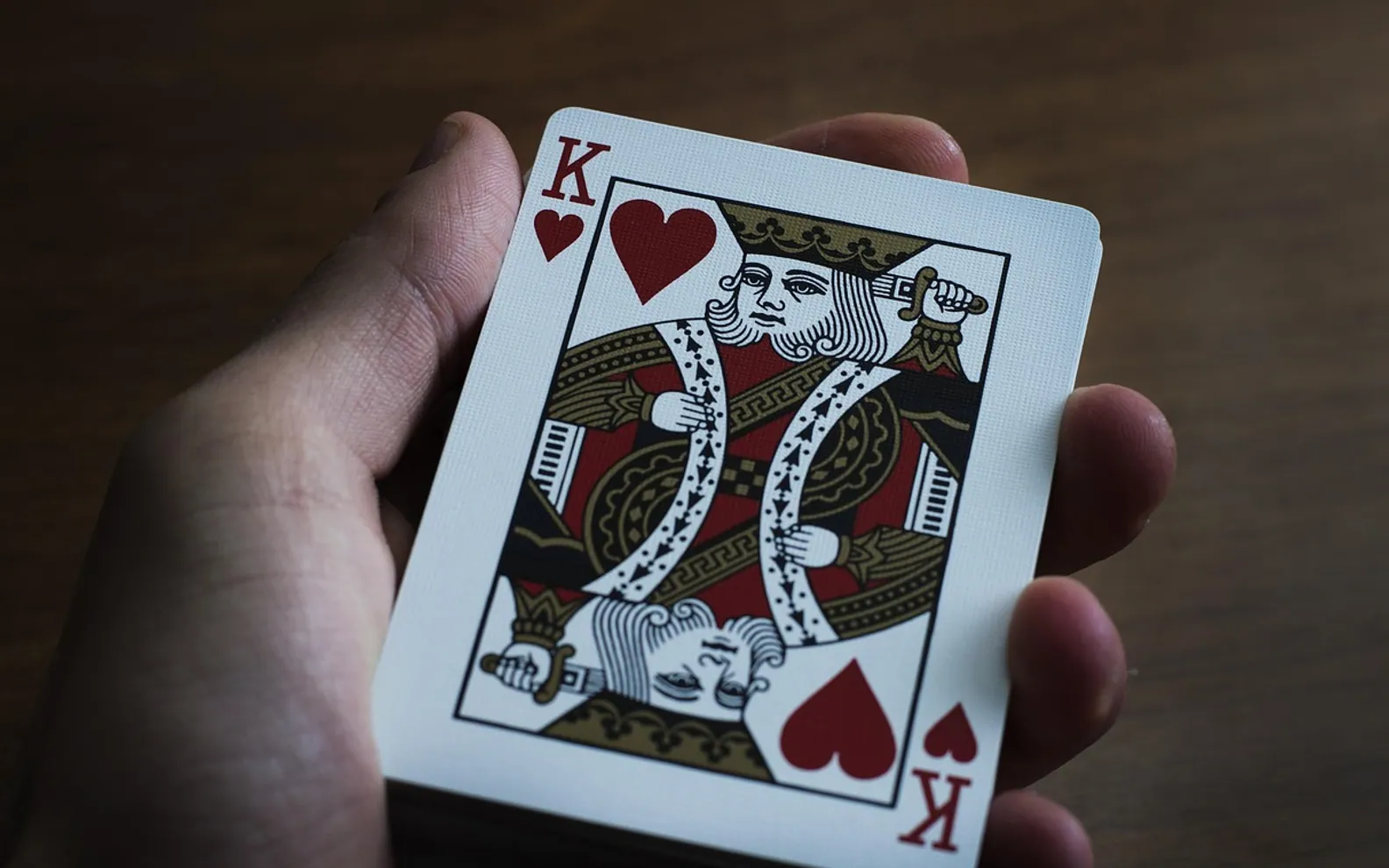
Gin rummy is the card game people reach for when there are two of them, one deck and an hour to fill. The rules fit on a single page, a hand takes a few minutes, and yet there is enough decision-making in every draw to keep regular players hooked for years. If you have only ever played the looser family versions of rummy, gin will feel faster and sharper.
What you need
A standard 52-card deck without jokers, two players and something to keep score with. Aces are always low in gin rummy, so a run can be ace-two-three but never queen-king-ace.
The goal of a hand
Each player tries to arrange their cards into melds, which come in two kinds:
- Sets: three or four cards of the same rank, such as three sevens.
- Runs: three or more cards in sequence in the same suit, such as the four, five and six of hearts.
Any card that is not part of a meld is deadwood. Face cards count ten points of deadwood, aces count one, and every other card counts its number. The lower your deadwood, the closer you are to ending the hand on your terms.
Dealing and the first card
- The dealer gives each player ten cards, one at a time.
- The next card is turned face up to start the discard pile. The rest form the face-down stock.
- The non-dealer may take that first upcard. If they decline, the dealer may take it. If both decline, the non-dealer begins by drawing from the stock.
A normal turn
Every turn has the same two steps. First, draw one card, either the top card of the stock or the top card of the discard pile. Second, discard one card face up. You may not pick up the discard and throw the same card straight back in that turn. Play continues until someone knocks or goes gin, or until only two cards remain in the stock, in which case the hand is usually cancelled and redealt with no score.
Knocking and going gin
When your deadwood totals ten or less, you may knock at the end of your turn. You lay out your melds, separate your deadwood and discard as normal. Your opponent then lays out their own melds and may lay off deadwood cards onto your melds, adding a fourth seven to your set or extending your run.
If all ten of your cards are in melds, you have gin. You lay down your hand, and your opponent may not lay off anything. Going gin is worth a bonus, which is why some players wait for it instead of knocking early.
Scoring
Scoring varies a little between tables, so agree on the numbers before you start. The table below shows a widely used set of values.
| Result | Who scores | Points |
|---|---|---|
| Knock, knocker has less deadwood | Knocker | The difference between the two deadwood totals |
| Undercut: defender's deadwood is equal or lower | Defender | The difference plus an undercut bonus, often 25 |
| Gin | Player who went gin | Opponent's deadwood plus a gin bonus, often 25 |
A game normally runs until one player reaches 100 points. Many tables add a game bonus for winning and a small bonus for each hand won, but those extras are optional and easy to leave out while learning.
Tips that help beginners
- Shed high cards early. An unmatched king is ten points of risk if your opponent knocks.
- Watch the discard pile. Every card your opponent picks up tells you what they are collecting, and every discard tells you what they are not.
- Prefer flexible cards. A six of clubs next to a five and seven of clubs can join a run in two directions; a lone queen cannot.
- Knock when it is safe. Waiting for gin feels exciting, but an early knock with low deadwood often wins more points over a game.
- Beware of undercuts. Knocking with nine or ten points against a careful opponent invites an undercut.
Where gin rummy fits
Gin rummy belongs to the big rummy family, which also includes the tile-based games played across Asia and the many melding games found in casual card apps. It is a natural companion to the classic draw game in dominoes, since both reward matching and patient counting. Played at home for points, it is pure fun; if anyone at the table suggests playing for money, keep stakes friendly and small, stay within your local rules and remember that the evening is meant to be a pastime, not a source of income.
Shuffle up
The fastest way to learn is to play a few open hands with cards face up, talking through each choice. After three or four hands, the rhythm of draw, think and discard becomes second nature, and the game starts to show its depth.
Editor’s picks
 HobbiesFarkle Rules and Scoring: How the Six-Dice Game Works4 min
 GamblingThe Craps Odds Bet Explained: True-Odds Payouts Behind the Line4 min
 GamblingWhat Is the House Edge? The Built-In Margin, Explained4 min
 BlogWHAT I ACTUALLY DO FOR A LIVING | BUILT 11 INCOME STREAMS BY AGE 27 | Side Hustles & Passive Income2 min